The Assumption That Gets People Into Trouble
In Ireland, many people assume that "the law will protect me" if something goes wrong in a business deal, rental arrangement, or service agreement. Unfortunately, that assumption often leads to expensive disputes, damaged relationships, and stressful legal uncertainty.
The reality is that Irish law provides strong protections in some areas — but in many everyday situations, those protections are surprisingly limited, unclear, or difficult to enforce in practice. A well-written contract can often provide far more practical protection than relying solely on default legal rules.
One of the clearest examples of this gap is Ireland's Rent-a-Room Scheme.
The Rent-a-Room Scheme: Convenient, But Legally Fragile
Under the scheme, homeowners can rent a room in their primary residence and earn tax-free income up to a certain threshold — an arrangement that has become increasingly popular due to the housing crisis and rising living costs. However, many people do not realise that occupants under the scheme are generally considered licensees, not tenants.
That distinction matters enormously. A tenant in Ireland usually benefits from substantial protections under residential tenancy legislation, including notice periods, dispute resolution mechanisms, and rights regarding eviction procedures. A licensee often does not. This creates a situation where a homeowner may struggle to remove a problematic occupant quickly if expectations were never clearly agreed, and where an occupant may lose their accommodation with very limited legal recourse. Disputes about guests, bills, noise, cleaning, deposits, or notice periods can become highly charged because the law provides little structure to resolve them.
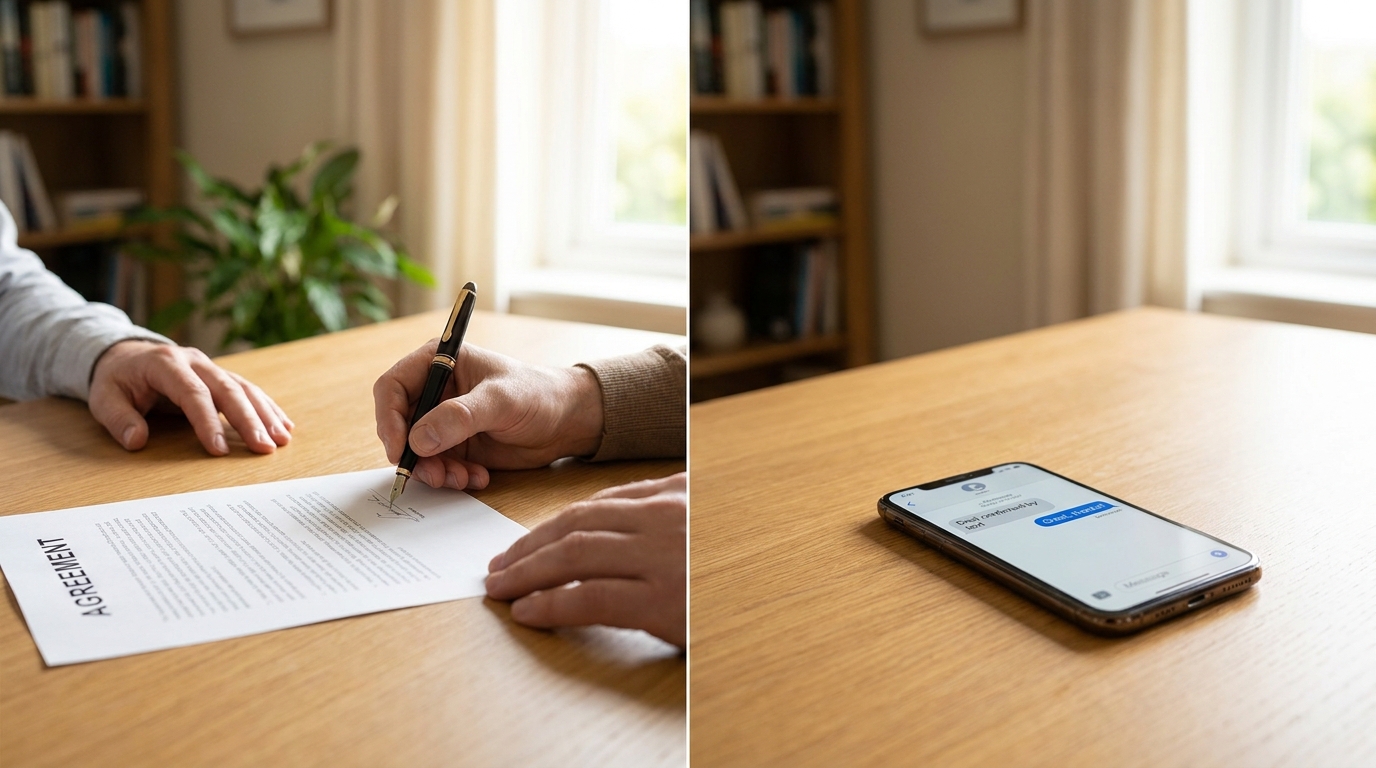
In practice, many Rent-a-Room arrangements rely entirely on verbal agreements or text messages. That is risky for both sides.
A Contract Creates Clarity Before Problems Arise
Most disputes do not begin because one party intended to behave badly. They begin because expectations were never properly discussed, assumptions differed, or important details were left vague. A written agreement forces both parties to clarify those issues before anyone moves in or starts work.
A simple Rent-a-Room agreement, for instance, could specify how much notice must be given by either side, whether overnight guests are permitted, how utility bills are split, cleaning responsibilities, deposit terms, quiet hours, and what happens if a payment is missed. Without a written agreement, these issues become arguments based on memory and interpretation. With a contract, both parties have a clear reference point.
Small Irish Businesses Face the Same Problem
The pattern repeats across Irish small businesses and freelance work. Many tradespeople, designers, developers, consultants, and small suppliers operate informally — especially when dealing with acquaintances, referrals, or repeat customers. A builder begins work on the basis of a phone call. A freelancer starts a project after a WhatsApp conversation. A customer assumes unlimited revisions are included. A business assumes payment will arrive immediately on completion.
When expectations diverge, the legal system often cannot provide a fast, practical, or affordable solution. Even when someone is technically in the right, pursuing a claim through the courts may cost more than the dispute itself. That is why contracts matter.
Contracts Do More Than Protect Against Court Cases
Many people think contracts are only useful "if things go very wrong." In reality, a good contract often prevents disputes from happening at all. A clear written agreement reduces misunderstandings, makes professional boundaries explicit, discourages unreasonable behaviour, and gives both parties confidence that they are entering into something well-defined.
The best contracts are not designed for conflict — they are designed to prevent conflict from happening in the first place.
This is particularly important in Ireland, where many arrangements remain informal, personal relationships frequently overlap with business dealings, and people often avoid difficult conversations at the outset. Ironically, avoiding those conversations early almost always creates larger conflicts later.
Irish Courts Focus on Evidence
If a dispute reaches the courts or the Workplace Relations Commission, evidence becomes critical. A verbal agreement is far harder to prove than a signed document. Judges and adjudicators frequently have to decide whose version of events is more believable, what was actually agreed, and whether certain promises were ever made. A properly drafted contract that confirms payment terms, defines responsibilities, establishes timelines, and records that both parties understood the arrangement can make dispute resolution faster, cheaper, and considerably less stressful.
The "It'll Be Grand" Mentality Can Be Expensive
Ireland has a strong culture of trust and informality in personal and business relationships. In many situations, that works perfectly well — until it doesn't. People often avoid contracts because they feel awkward, worry it seems unfriendly, or believe that written agreements are only for large companies. But contracts are often more important for ordinary people and small businesses, precisely because they have less financial capacity to absorb a dispute.
A large corporation may survive a €5,000 disagreement without lasting damage. For an individual homeowner, freelancer, or small business owner, the same dispute can cause serious financial strain — and months of stress on top of it.
A Good Contract Protects Both Sides
One of the biggest misconceptions about contracts is that they only benefit the person who drafted them. A fair contract should protect everyone involved. A homeowner gains certainty about house rules and payments. An occupant gains clarity about notice periods and living conditions. A freelancer gains protection against unpaid work. A customer gains certainty about deliverables and deadlines. The goal is not to create hostility — it is to reduce ambiguity before it becomes a problem.
Prevention Is Cheaper Than Conflict
Legal disputes are expensive, both financially and emotionally. Even relatively small disagreements can consume months of stress, significant legal fees, damaged relationships, and lost time. A carefully written contract is often one of the cheapest forms of protection available. In many cases, spending an hour discussing expectations and putting them in writing can prevent years of frustration down the line.
Whether it is a Rent-a-Room arrangement, a freelance project, a construction job, a service agreement, or a small business partnership, a written contract creates structure where the law may provide very little practical guidance. SigSwift offers a range of ready-made templates for exactly these situations — including a rent a room scheme agreement and a freelance contract — drafted for Irish law, fully customisable, and signed entirely online.